
In the native reforestation project at MCR, I have been experimenting with re-purposed materials to control invasive weeds. In between and around the base of 2-yr old hala (Pandanus tectorius) we are using overlapped cardboard along with thick layers of moistened, shredded paper. Minus the shredded paper, this process is also being used around breadfruit (‘ulu) trees (Artocarpus altilis). Both areas require mowing down existing weeds first.
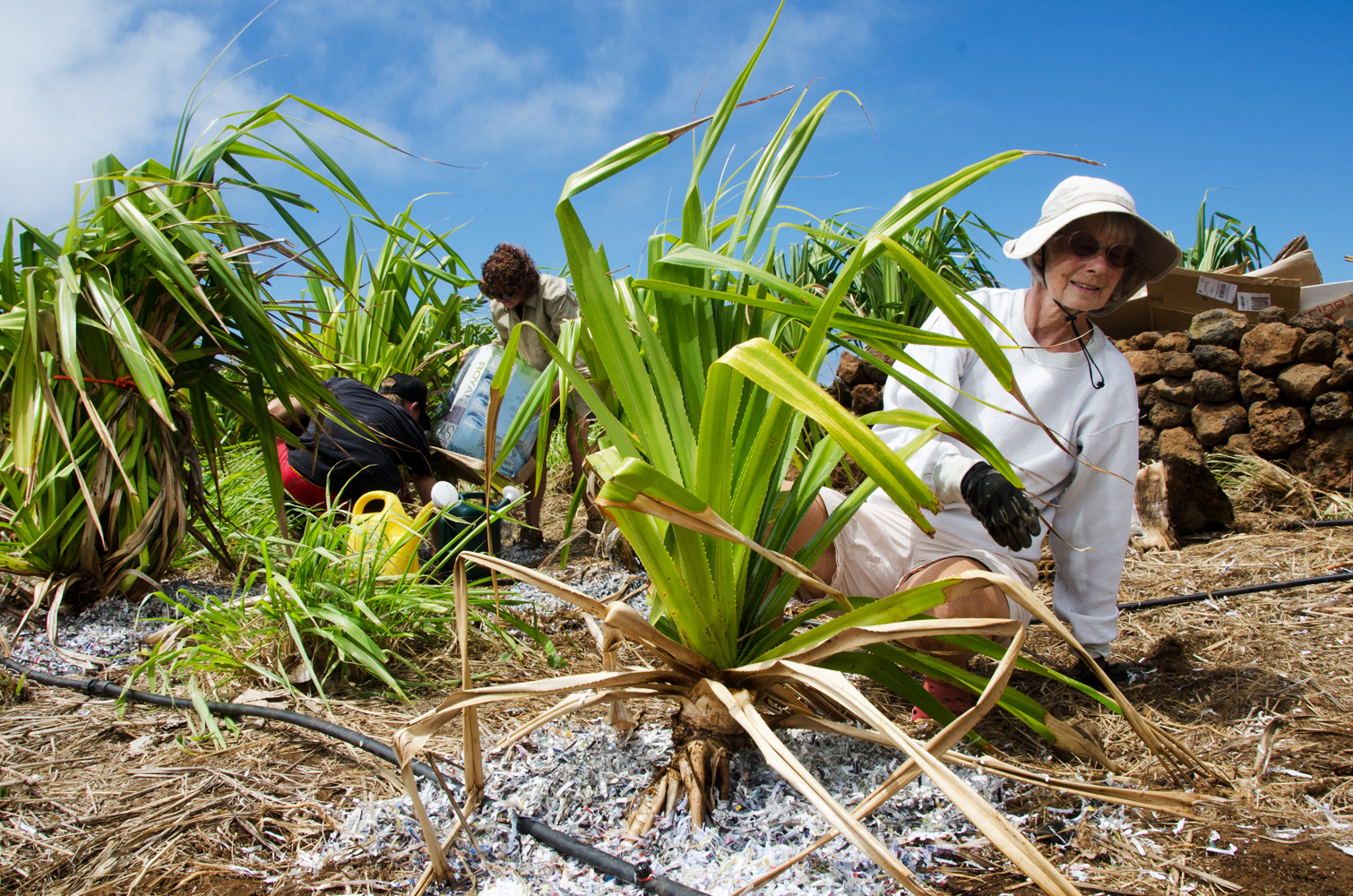
Ace volunteer Billie Dawson puts shredded paper around native hala trees.
There are advantages and disadvantages to using these materials as weed barriers. Watered down, the shredded paper congeals and the cardboard conforms to the ground contour, remaining in place remarkably well. These readily available, free, local, abundant, bio-degradable resources have the capacity to effectively deprive invasive weeds of essential oxygen and light required for survival, but a treatment only lasts a year or so. When it rots away, though, it actually ends up enriching the soil.
From start to finish, this process is multi-stepped and labor intensive. Multiple pairs of hands are recommended to collect and transport materials to location; tie back hala leaves for maneuverability and safety; move large pieces of cardboard between plants in gusty winds; position overlaps away from prevailing winds; and secure a large supply of rocks to hold down cardboard. For large areas, weed control by tortoise is much easier, but we don’t need a fence to keep the paper and cardboard in place!