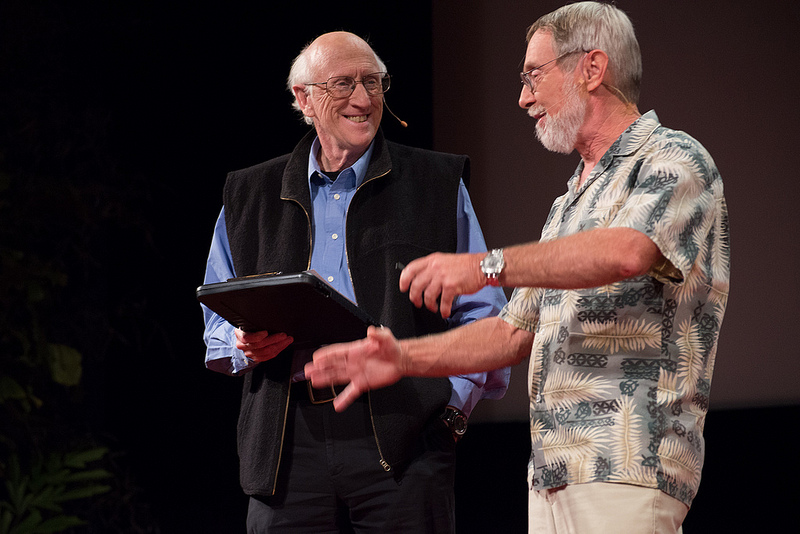
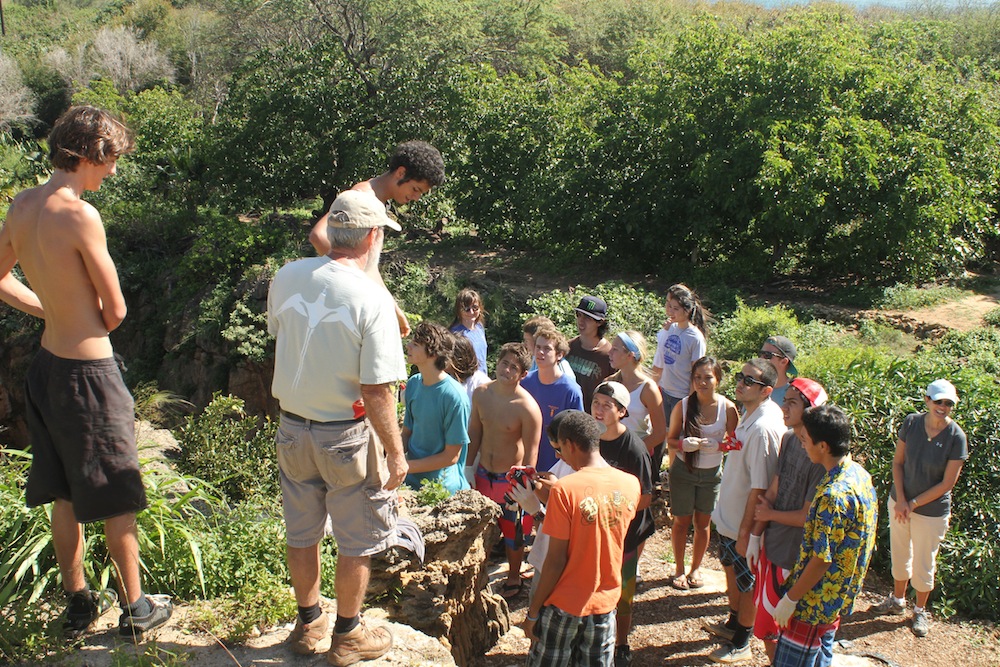
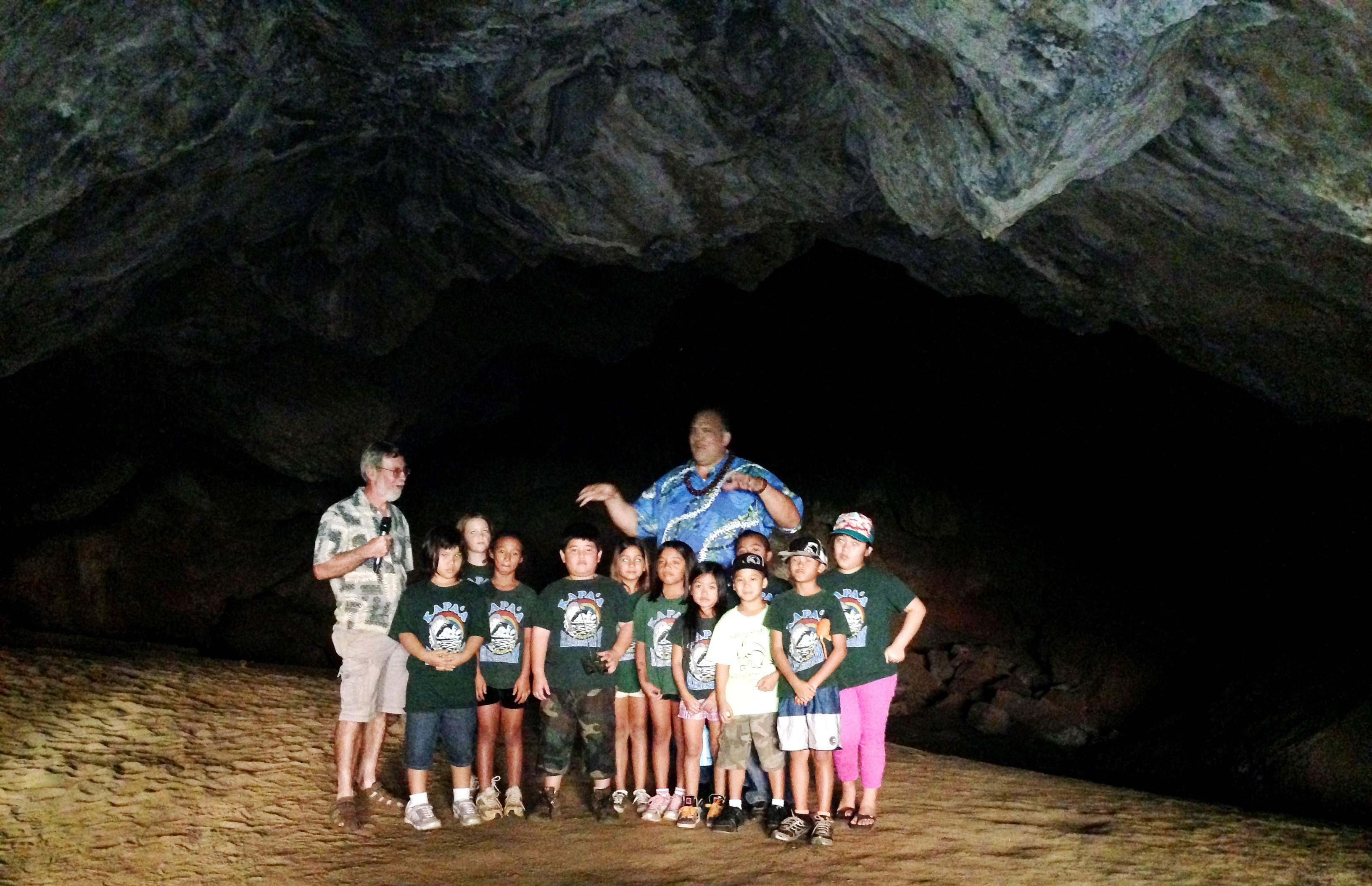
We always learn a lot from visits to the cave by experts of all sorts, but a couple of days ago we had a special treat: two top experts on extreme tsunami events, Dr. Gerard Fryer, Senior Geophysicist at the Pacific Tsunami Warning Center in Honolulu, and Dr. Rhett Butler, a scientist and consultant who models the seismic dynamics of large earthquakes and other causes of tsunami waves.
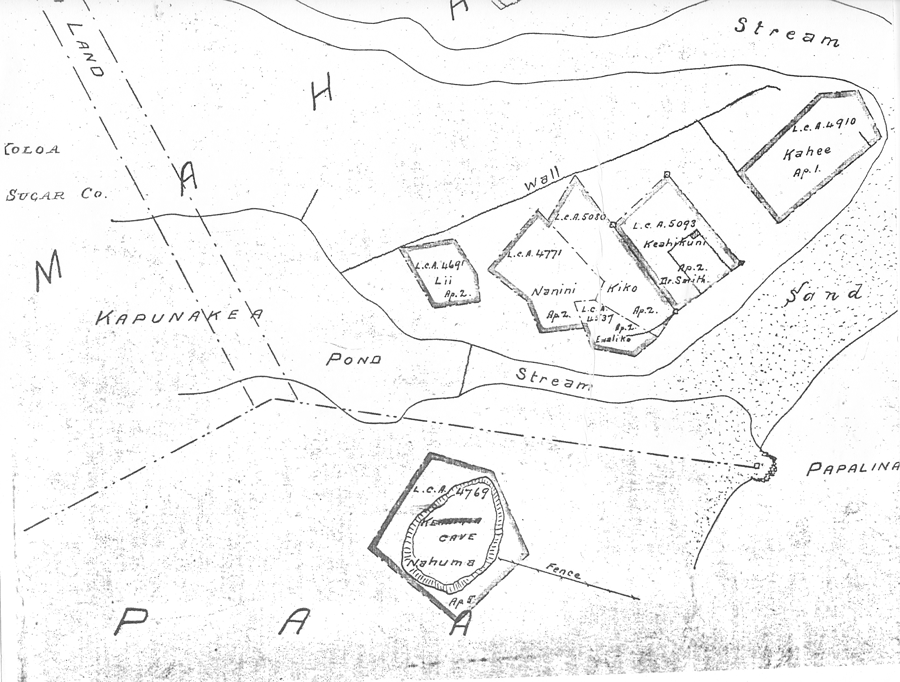
Of course, they were curious, as was Dr. Walt Dudley of the Pacific Tsunami Museum in Hilo when he visited several years past, to see the remarkable evidence from Makauwahi Cave for a huge marine overwash of the site about four centuries ago. In a 2001 publication in Ecological Monographs, one of the most intensely peer-reviewed publications in the field, we reported a 95% confidence interval for a date of between 1430 and 1665 AD for SOMETHING that swept over this site, laying down large stones of several types in “a lens up to 1 meter thick at the lowest point of the sinkhole rim along the east wall, thinning out in the far reaches of the caves as turbidite fans and gravel beds.” (A turbidite fan is a debris field that can form around the edges of a powerful underwater event.)
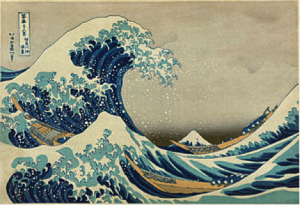
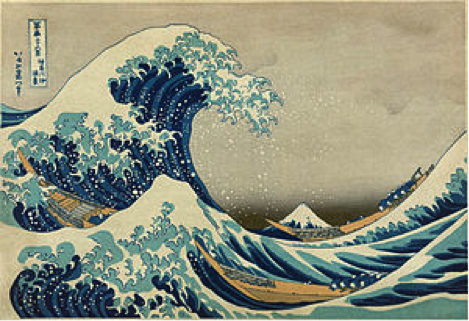
In one of the most famous of all Japanese woodblock prints, Hokusai depicted ca. 1830 a huge wave engulfing three fishing vessels, with Mt. Fuji in the background.
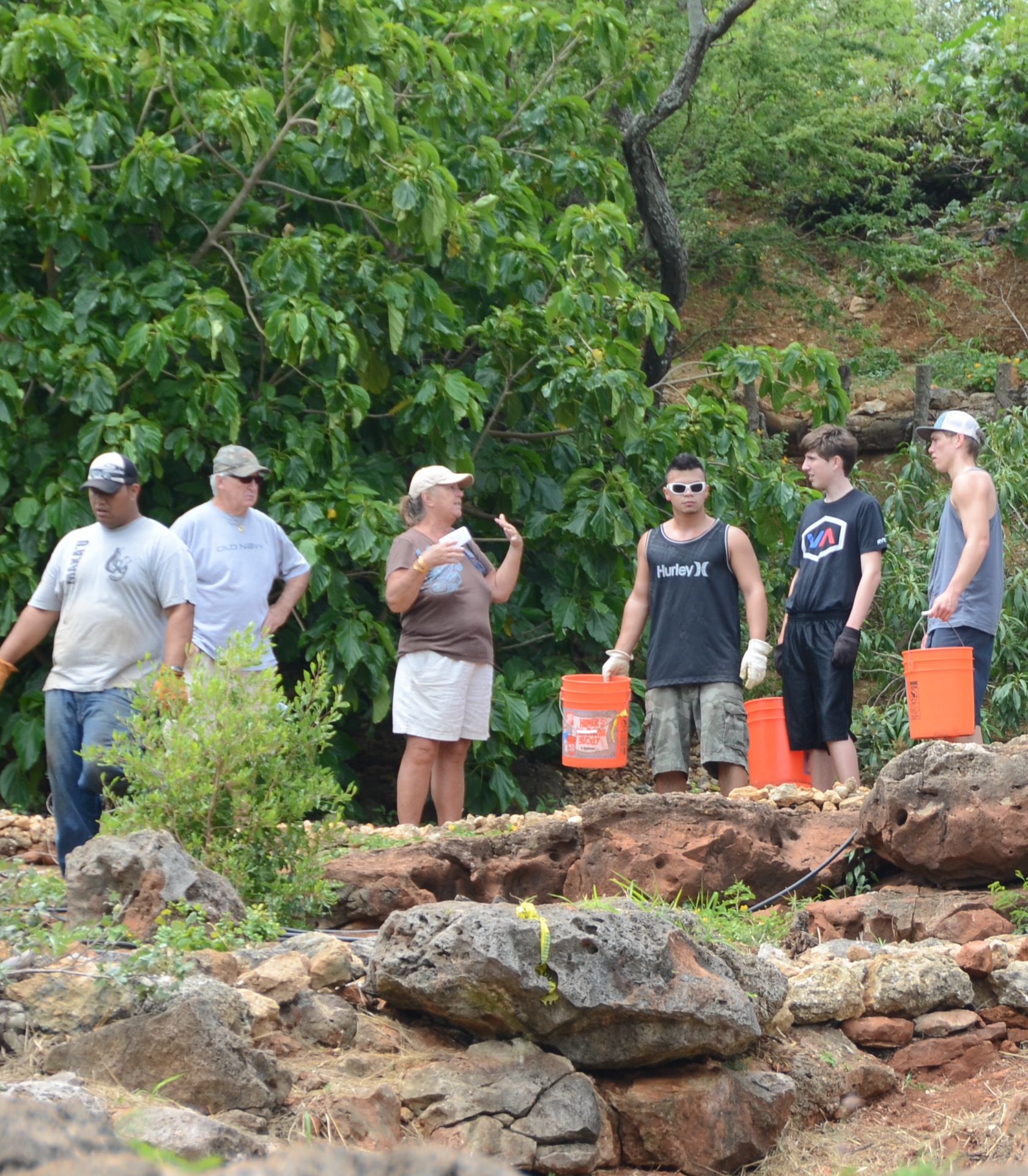
After we pumped down the Northwest Pit, the tsunami experts donned the requisite helmets, and
carefully followed me down the wet, muddy extension ladder into the “poor man’s time machine” I write about so fondly in Back to the Future in the Caves of Kaua`i. They gasped at what they saw, as have so many others on first seeing this remarkable hodgepodge of basalt, lithified red soil, beach calcarenite, and blasted-apart pieces of the cave walls themselves, even stalactites. Tucked in the crevices between, in a matrix of sand, gravel, clay, and organic matter, are bones of large fish, wooden and stone artifacts, and big splintered pieces of tree trunks.
Continue reading →