Gaining Traction

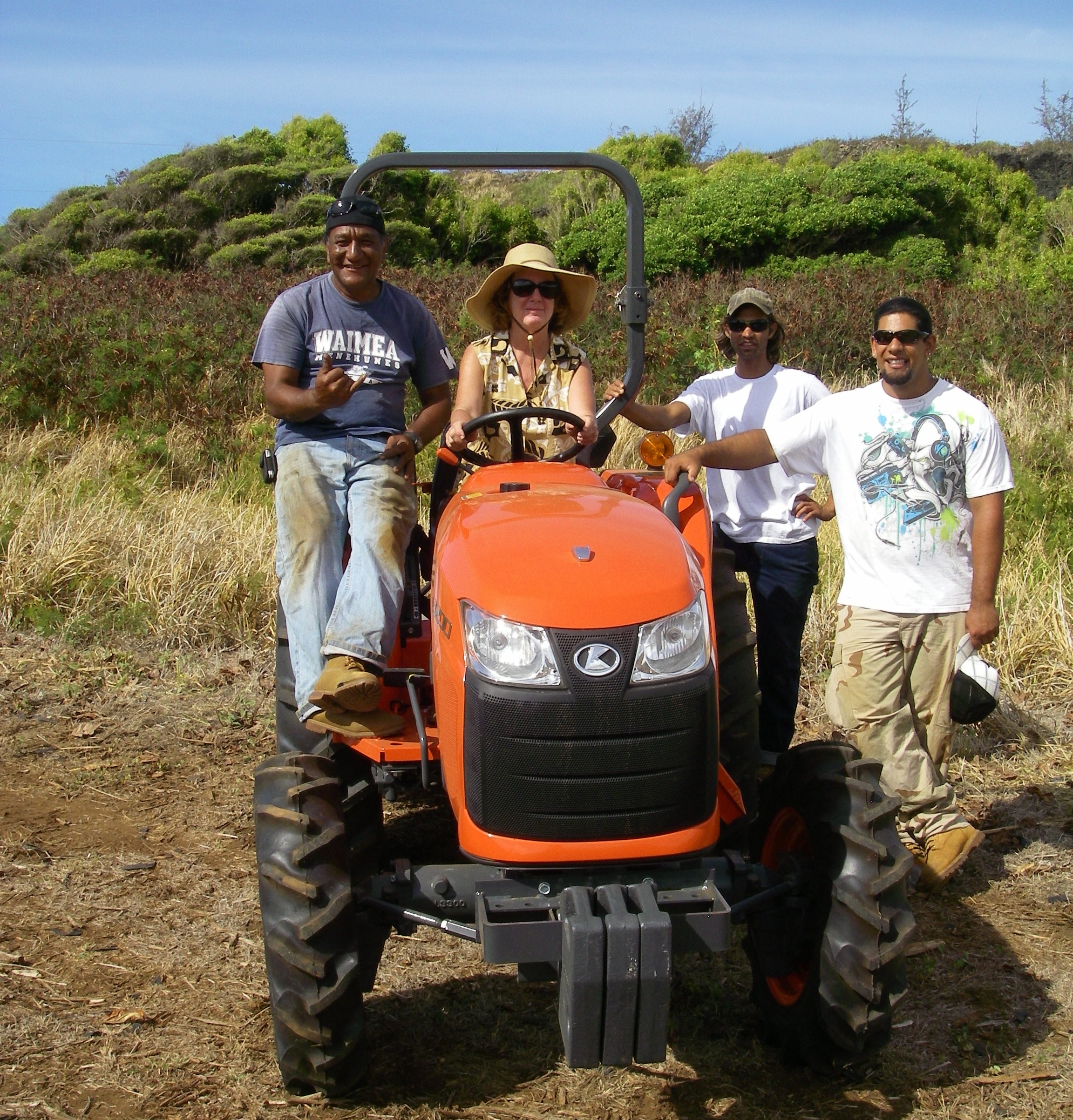
Our venerable old BCS walk-behind tiller has served us well for eight years, but it is on its last legs and quite wired-together.

Happily, we received a much needed and appreciated $24,000 grant from the Omidyar ‘Ohana Fund of the Hawaii Community Foundation via our fiscal sponsor (Garden Island RC & D) just in time to keep the weeds down and till new ground for planting.

We are now the proud owners of a beautiful Kubota L3200DT-1 with attachments for mowing and tilling the Reserve’s fields at record pace.

Mahalo!

Tractor

Shifting “Pair o’ Dimes”

One July a few years ago the Archaeological Field School was digging and screening down at Makauwahi Cave, in an upper layer that I had told them “might be late 19th or early 20th century” based on manufactured items we had found. I mentioned that the ideal way to date sediments too young for radiocarbon dating like this was to find something (like a gold or silver coin, I joked) with a date on it. The layer has to be about that age, or younger the reasoning goes.

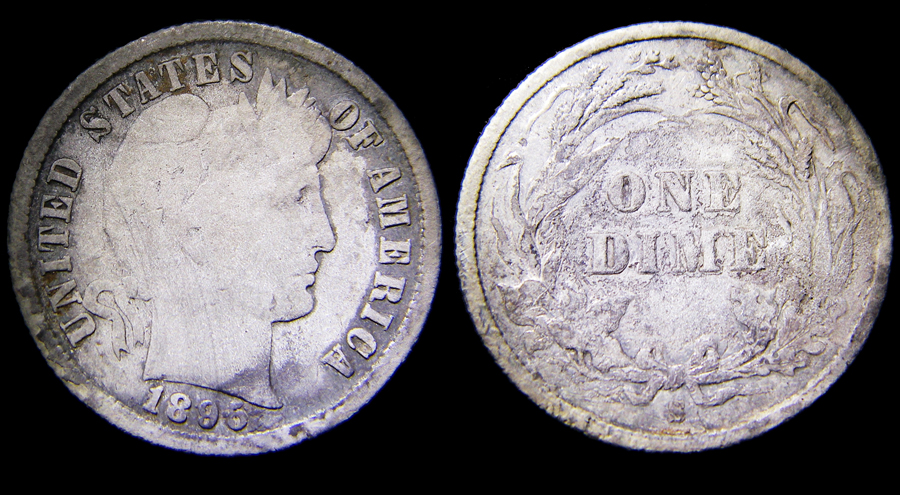
The 1895-S Barbor Dime

The 1895-S Barber Dime

One of the students called out a while later, “Dr. Burney, there’s a silver coin on my screen.” When I washed it off and looked at the front for the date, and the back for the mint mark (I was a coin collector from an early age), I nearly fainted: Continue reading

Leopard Tortoises

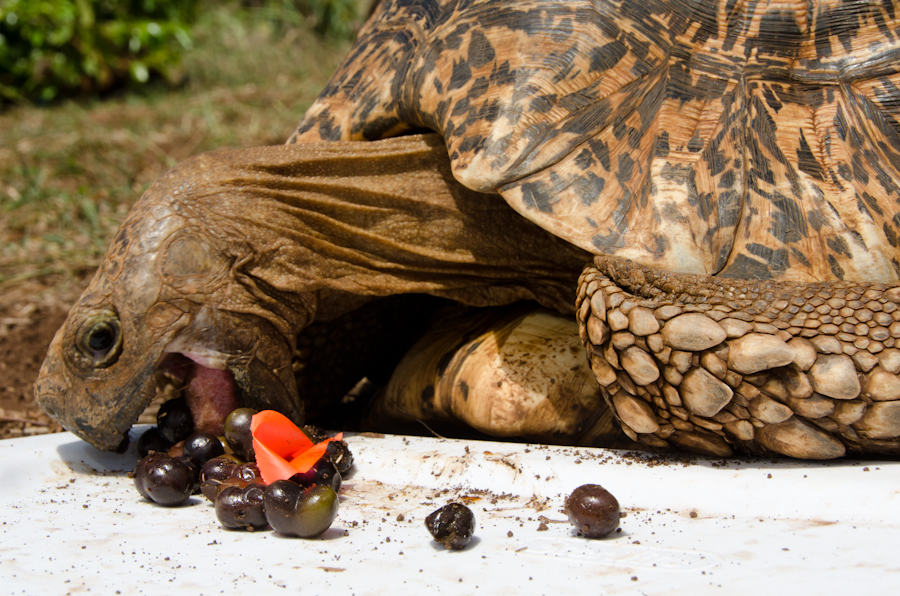
Leopard Tortoises
Our scientific study of the use of giant tortoises to control invasive weeds has added a second species: the African Leopard Tortoise. We have two, with two more on the way. In their native habitat, they are noted for eating a lot of thorny plants, so we hope they will focus on some of the non-natives that our African Spurred Tortoises shun. They also love to eat the fruits of some of our native trees, and our preliminary results show that the slow passage through their gut increases germination rates.

Welcome to “Docents’ Corner.”

In future editions of this newsletter you will be hearing from the volunteers and docents at Makauwahi Cave Reserve. We’ll share interesting experiences, in and out of the cave, and perhaps even make our stories so compelling you will decide to join in the fun.

Mary and Barry

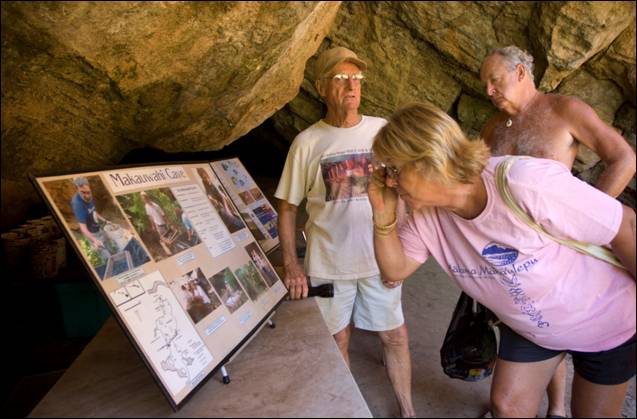
Mel Gabel (left), our very first docent, giving a cave tour for Mary and Barry Werthwine about half a decade ago. In recent years Mary has been the project’s Volunteer Coordinator. (photo by Alec Burney)

Everyone visiting the site seems to appreciate the work that has and is being done, always making our job a positive. Most view the area not just of cultural and scientific importance, but also unique, spiritual, mysterious, peaceful, and most of all intriguing. Continue reading

Weirdest Duck of Them All

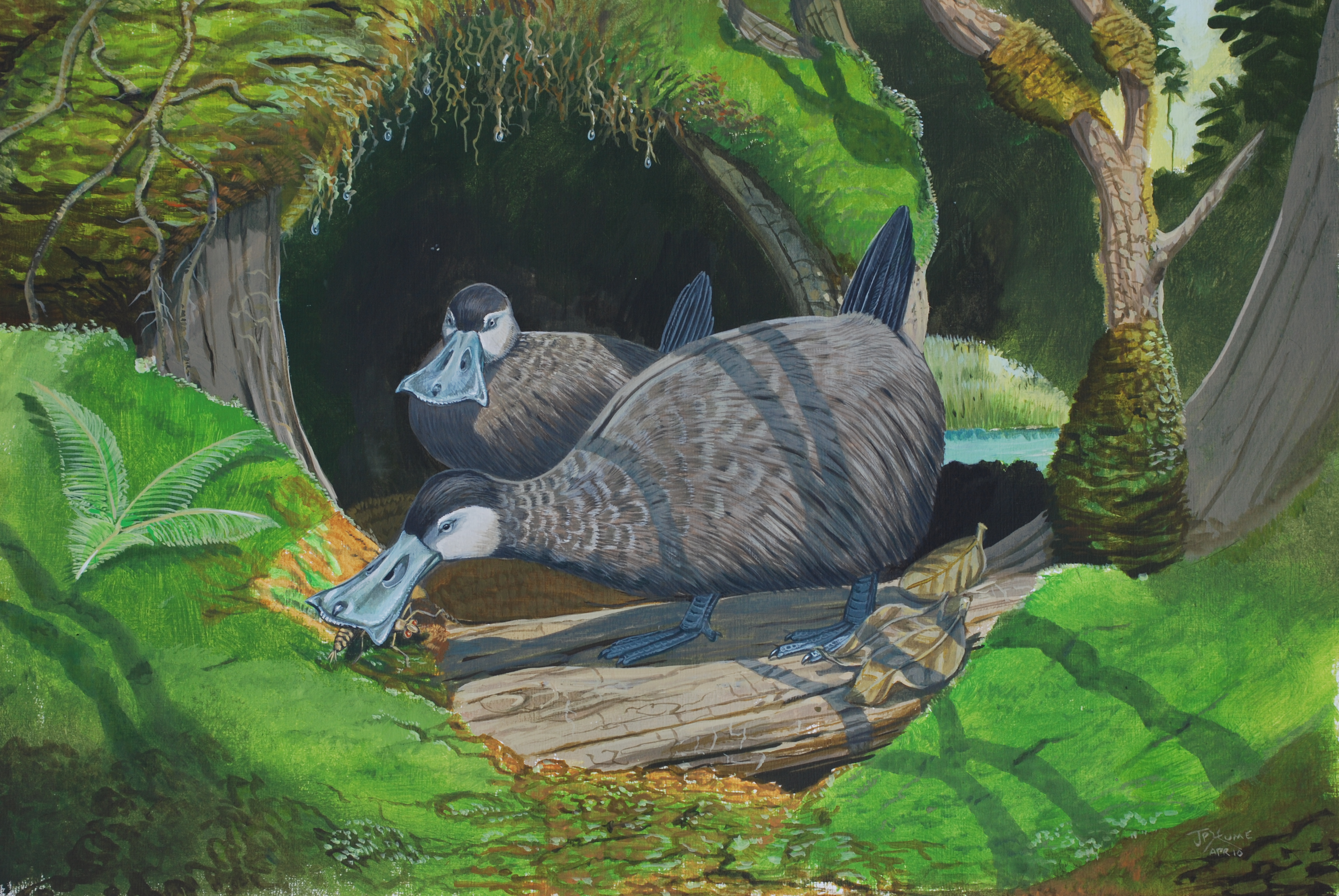
Talpanas lippa JP Hume

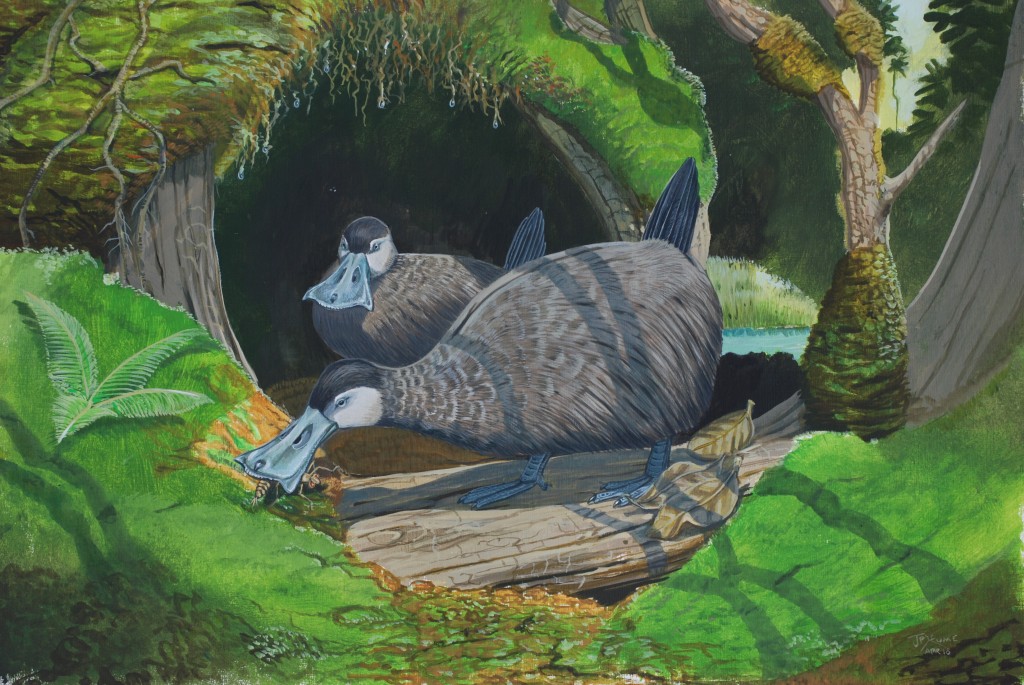
The extinct Kaua’i Mole Duck (Talpanas lippa) is known only from the fossils we have found in Makauwahi Cave. For more of Dr. Julian Hume’s paintings, see his excellent new book Extinct Birds.

I can still remember what I said that day, over 15 years ago, when I climbed out of the ever-growing East Pit excavations of Makauwahi Cave, and walked over to Storrs Olson with a peculiar skull in my muddy hand that I had just found: “Storrs, I’m embarrassed to say I can’t tell for sure whether this skull is from a mammal or a bird. It is really strange-looking.”

It was like nothing anybody had ever seen, we quickly agreed: something like an Australian platypus or a New Zealand kiwi. The eye sockets were tiny and far back on the head. The odd skull was very
flattened, with a long broad snout. Storrs reckoned it might be some kind of duck, but a very weird one indeed. We found a few more pieces of the skeleton that season, but it was over a decade later
before the experts decided what it was, and published a name, Talpanas lippa, literally “the nearly blind mole duck” (see our Resources Page for a pdf of the technical description, in Iwaniuk et al., 2009).
Continue reading

Check Out Our New Website!

After years of answering the question “Why doesn’t the cave have its own website?” with various lame excuses, now we can answer emphatically “But it does!” Thanks to Alec Burney, we now have lots of e-goodies up in the electronic jungle. So have a look at www.cavereserve.org and let us know what you like (and you can also “Like” us on the new Facebook page while you’re at it).

Cave Reserve Website

Cave Reserve Website

For folks who just enjoy looking at pictures, there are several recent photo albums. If you’re working on
a term-paper or a scientific publication, about two dozen publications that contain information about
the cave are there as downloadable pdf’s, from strictly technical stuff to popular magazine articles.
Continue reading

Plantation Days

Koloa Plantation Days are coming around again in late July. Scheduled events will include tours of the cave. Also, as usual, the Burneys will lead a hike from the Hyatt Hotel along the Maha`ulepu Heritage Trail, to visit the Wedge-tailed Shearwater colony, see grazing sea turtles, visit a WWII bunker, check out Kaua`i’s first-known fossil site in the Pa’a Dunes, and tour the Ho`ouluia Heiau, one of Kaua`i’s most unusual prehistoric temples.

The cliff trail at Makauwahi

Cliffs along the Maha`ulepu heritage trail

Interns at the cave

Three college interns are working at the Makauwahi Cave Reserve this summer. Marie McKenzie, a Geography major from University of Hawaii-Hilo, and Ron O’Brien, an agriculture major from the same institution, are working on aspects of the tortoise project, under support of the Pacific Internship Programs for Exploring Science (PIPES). Marie is studying the tortoises’ utilization of the habitat, in terms of food choices, movements, and sleeping sites. Ron is looking at seed dispersal and germination rates, and developing techniques for making compost tea and other fertilizers from their dung. Mary Coulombe, an environmental education major from Northern Arizona University (see article above) is coordinating educational programs and conducting studies of visitor use patterns and opinions. We look forward to future newsletter articles reporting their findings.

interns and jim with tortiouse

Marie McKenzie and Ron O’Brien, interns working on the tortoise project under support from the PIPES program at UH-Hilo, attach remote sensing devices to a tortoise’s shell to monitor movements and food choices.  Prof. James Juvik of UH-Hilo Geography Department is a co-adviser on the project.

County Parks “Discover” the Cave

The County of Kaua`i Parks and Recreation Department has been making good use of the Makauwahi Cave Reserve lately. Although we are not a county park, the Reserve’s policy of making the site available free of charge for any compatible use by local individuals and groups, and the wide range of interesting activities that are available, makes it an ideal venue for – almost anything! For instance, Mayor Bernard Carvalho joined the County Parks employees for a team-building program for managers and staff back in March. The group had such a good time there that they decided to add the site as a venue for their ever-popular summer enrichment program (day camp) for local children.

Governor of Kauai at a team building excercise

Mayor Carvalho takes part in a County Parks team building exercise at Makauwahi

Continue reading

News from National Geographic

David Burney in the radio studio

David Burney in the radio studio

Dr. Burney recently was invited to the National Geographic Society headquarters in Washington D.C. to speak in a series called “A Closer Look.” This was an audition of sorts, in which recipients of National Geographic grants are chosen to provide a talk about their funded research project for several dozen of the more than 1500 employees of this grand institution, including publicists, administrative officials, and technical staff of the various media branches. Several products came out of this: on June 17 an interview (listen online here) aired with Boyd Matson, host of the “National Geographic Weekend” talk show on XM Sirius Satellite Radio and about 100 radio stations throughout the nation.

Continue reading