A word from Wendy

Botanical illustration

A favorite illustration by Wendy, showing the taro in all its glory.

Once again this February, my Botanical Illustration Intensive Workshop at NTBG will be touring and picnicking at Makauwahi Cave Reserve. This course, hosted now for the third time at the National Tropical Botanical Garden on Kaua`i, is a great opportunity to learn how to draw plants with technical accuracy and in full color. The 2013 class will run from February 10-24, but it is nearly filled up. Only two slots are left, so check out the web page quickly if you would like to join in!

We will teach you the basics of plant illustration, or help more experienced artists move to the next level. I am being joined by botanical artist and instructor Carol Woodin, who is noted for her paintings of rare orchids and is an expert on watercolor techniques and vellum. The course will also include instruction in floral anatomy and plant ecology by Dr. Burney, with a field trip to Limahuli Gardens as well as Makauwahi Cave. The program has the full benefit of the fantastic resources of NTBG, including thousands of labeled plants in its living collections, as well as a herbarium, a comprehensive botanical library, and a unique collection of botanical artworks spanning more than four centuries.

Wendy Hollender, artist, author, instructor
Wendy Hollender, artist, author, instructor
Junior ROTC attacks plant invaders

JROTC at Makauwahi

JROTC at Makauwahi

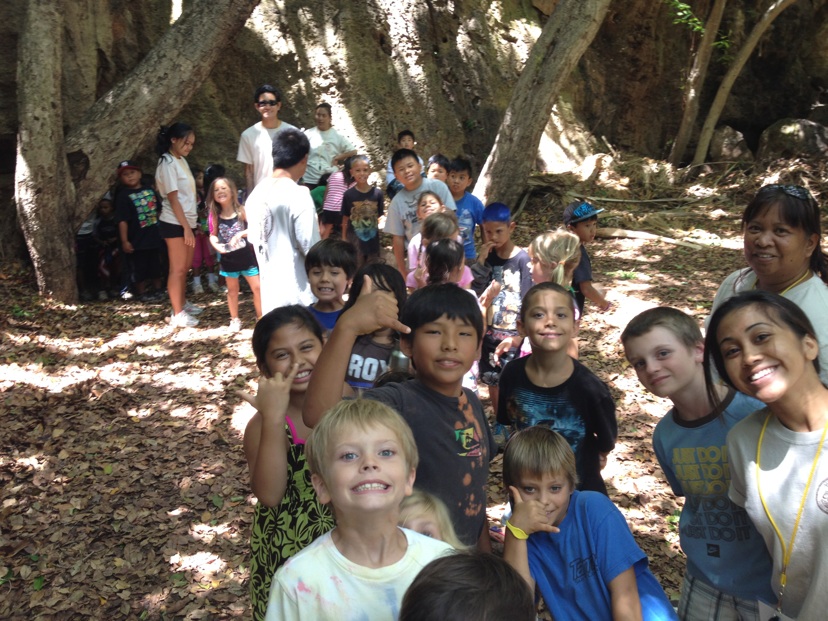
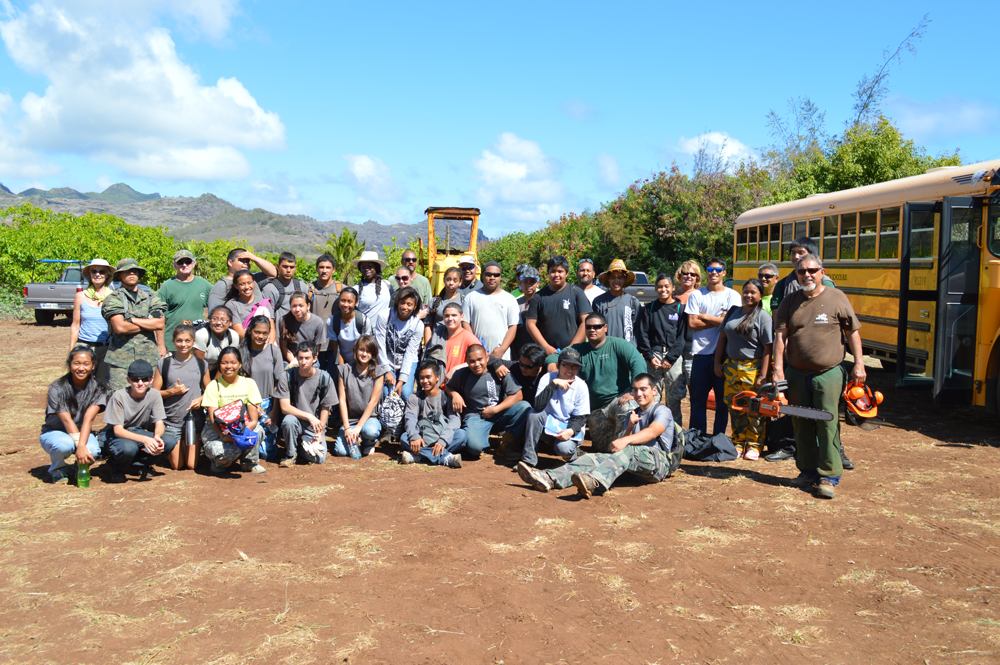
On the day before Halloween, Makauwahi Cave Reserve got some help from the military, in the form of 36 rambunctious recruits of the Kapa`a High School Junior Reserve Officers’ Training Corps. Under the direction of Colonel Roberto Levoit , six Kauai Invasive Species Committee employees, eight of our regular cave volunteers, and Reserve Manager Lida Pigott Burney, of course, the cadets battled invasive kiawe, christmasberry, haole koa, and Guinea grass, to make way for more native reintroductions along the horse trail and next to the picnic area. Marissa Sandblom and Arryl Kaneshiro welcomed the group on behalf of Grove Farm Company, which generously funded the buses for the visit.

If you build it

Unlike the baseball diamond in a corn field, created in the blockbuster movie Field of Dreams, old corn and sugar cane fields at Makauwahi Cave Reserve have been turned into — not a playing field for ghostly baseball heroes — but native habitat for endangered species. Besides the acres of native plants, we now have a half-dozen lovely lo`i, shallow terraced ponds for growing taro (Colocasia esculenta) known to most Hawaiians as kalo, and to our Niihau employees and their families, who built the ponds as part of the Office of Hawaiian Affairs (OHA) jobs program at Makauwahi and speak the Ni`ihau dialect as their mother tongue, as “talo.”

Stilts

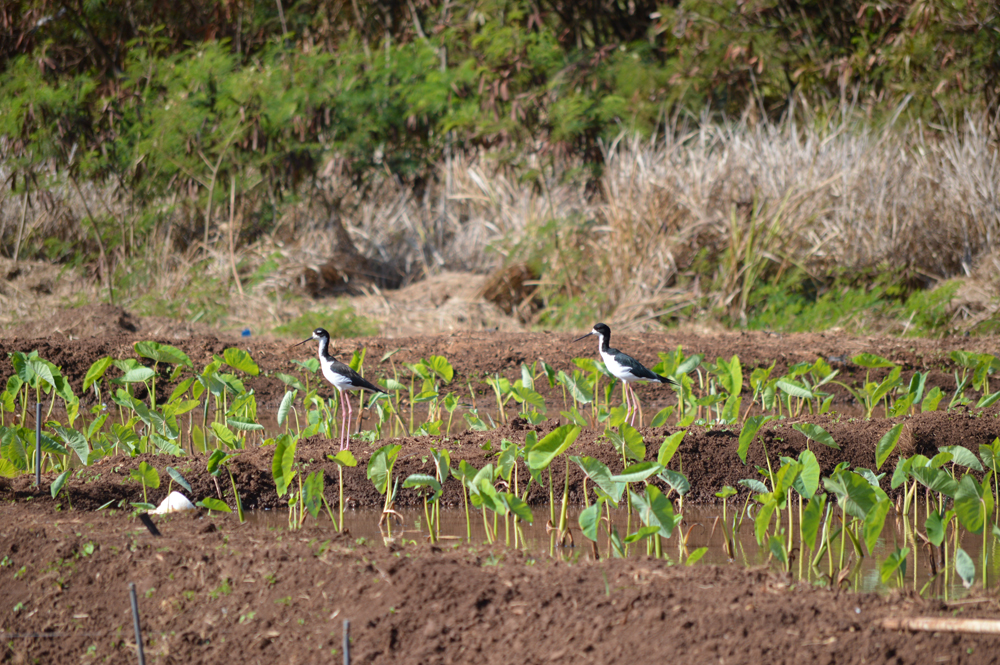
The new ponds at Makauwahi were visited by endangered Hawaiian Stilts as soon as they were finished.

Continue reading

Extinct Species – Back from the Dead?

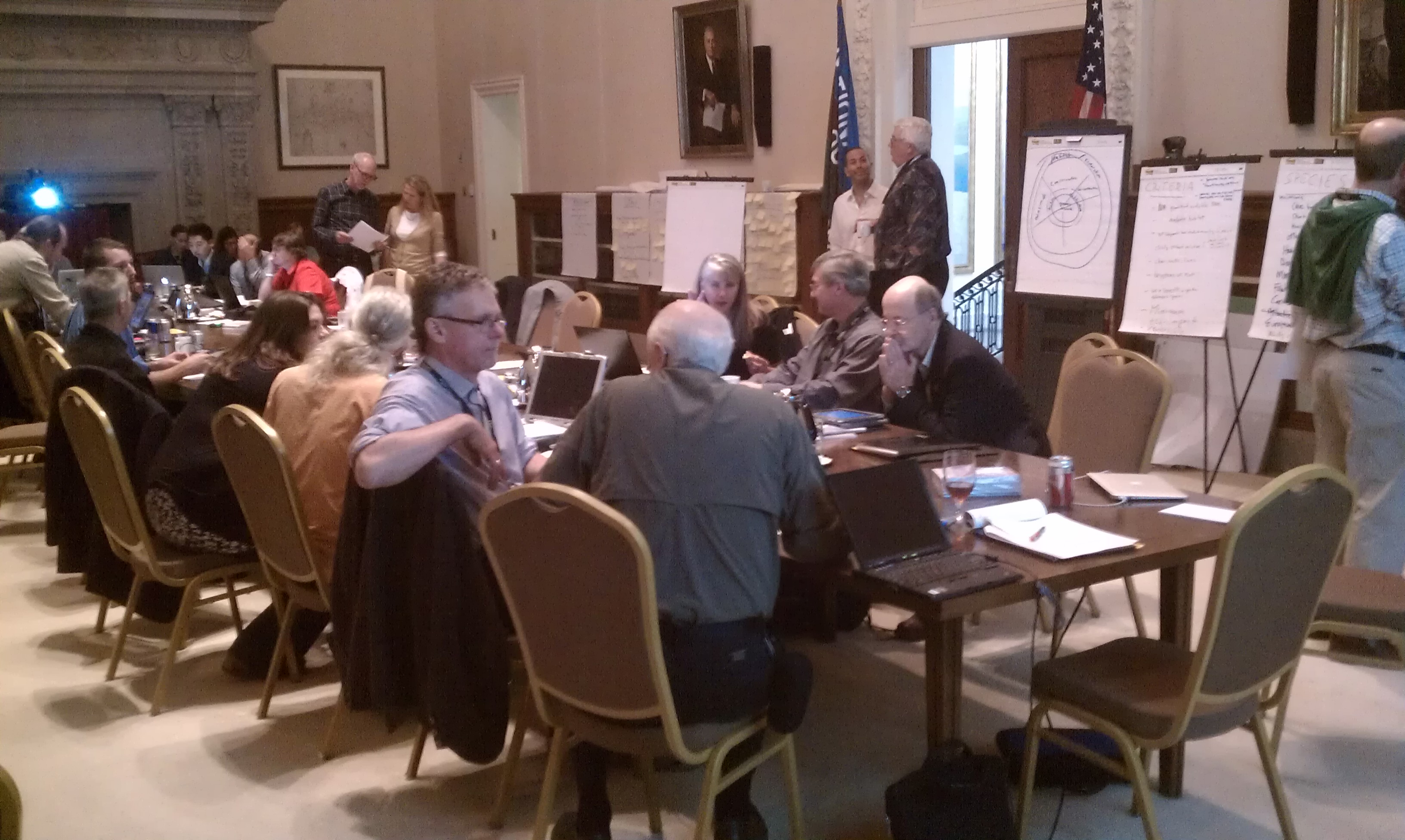
This is no belated Halloween joke. I mentioned in the last issue of the newsletter that I was going to National Geographic in October for a meeting that was, well, kind of “secret.” The Long Now Foundation and National Geographic sponsored a closed-doors meeting of scientists, ethicists, even attorneys, to discuss what sounds on the surface like a preposterous notion, that scientists may be on the brink of bringing an extinct species back to life.

The Workshop

The workshop: “Forward to the Past: De-extinction projects, techniques, and ethics” met in the venerable Hubbard Hall at National Geographic in Washington DC.

But actually, it’s already been done. The result, a lamb cloned from cells of the extinct bucardo, or Pyrenean ibex over two years after the last one died, only lived seven minutes after birth. But as visionary Harvard geneticist George Church quipped, the first airplane flight lasted 12 seconds. In any case, scientists around the world seem to be poised for even more remarkable feats of “resurrection“ from the Passenger Pigeon to the Wooly Mammoth.
Continue reading

KNPS Plant-out

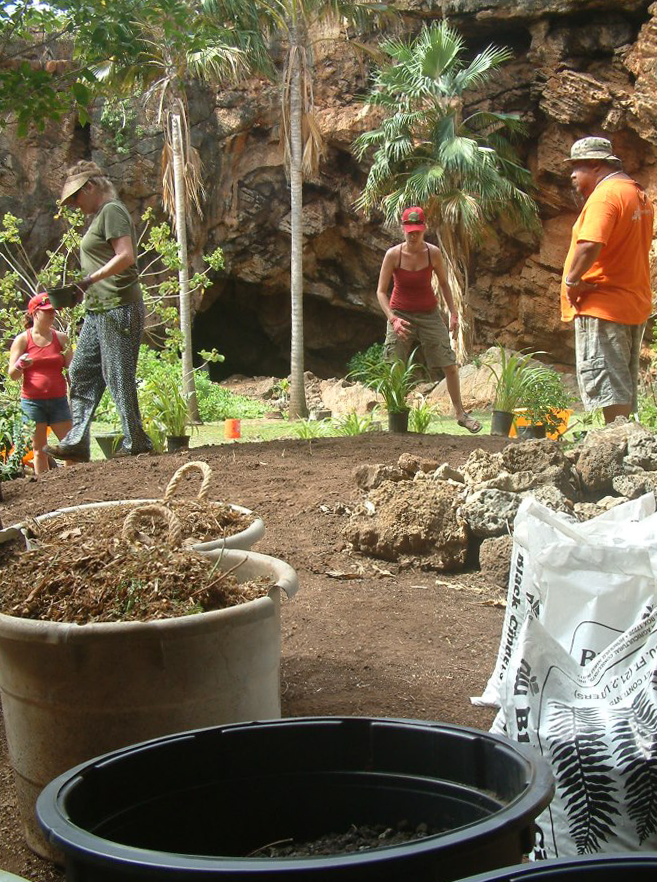
Last Saturday, September 22, was a great day for native plants at Makauwahi Cave! The Kaua`i Native Plant Society, 26 strong, showed up with a truckload of native Hawaiian plants and did some lovely landscaping inside the sinkhole. Come watch them grow (and pull a few weeds) over the next few months. Mahalo, KNPS!

KNPS Plant-out

Members of KNPS spent the day landscaping with native plants inside the sinkhole. (photo by Keren Gundersen)

Rumors of Retirement

“The rumors of my death,” wrote Mark Twain, “have been greatly exaggerated.” So with the news of my retirement from NTBG. It is true that I am leaving my post as Director of Conservation at NTBG in just a few days. But unlike Bilbo Baggins, in the opening scene of Tolkien’s Lord of the Rings trilogy, I will not be giving a farewell address to friends and then disappearing before their eyes. For starters, I don’t have a magic ring, although one would be handy at times.

Burney building a wooden boat

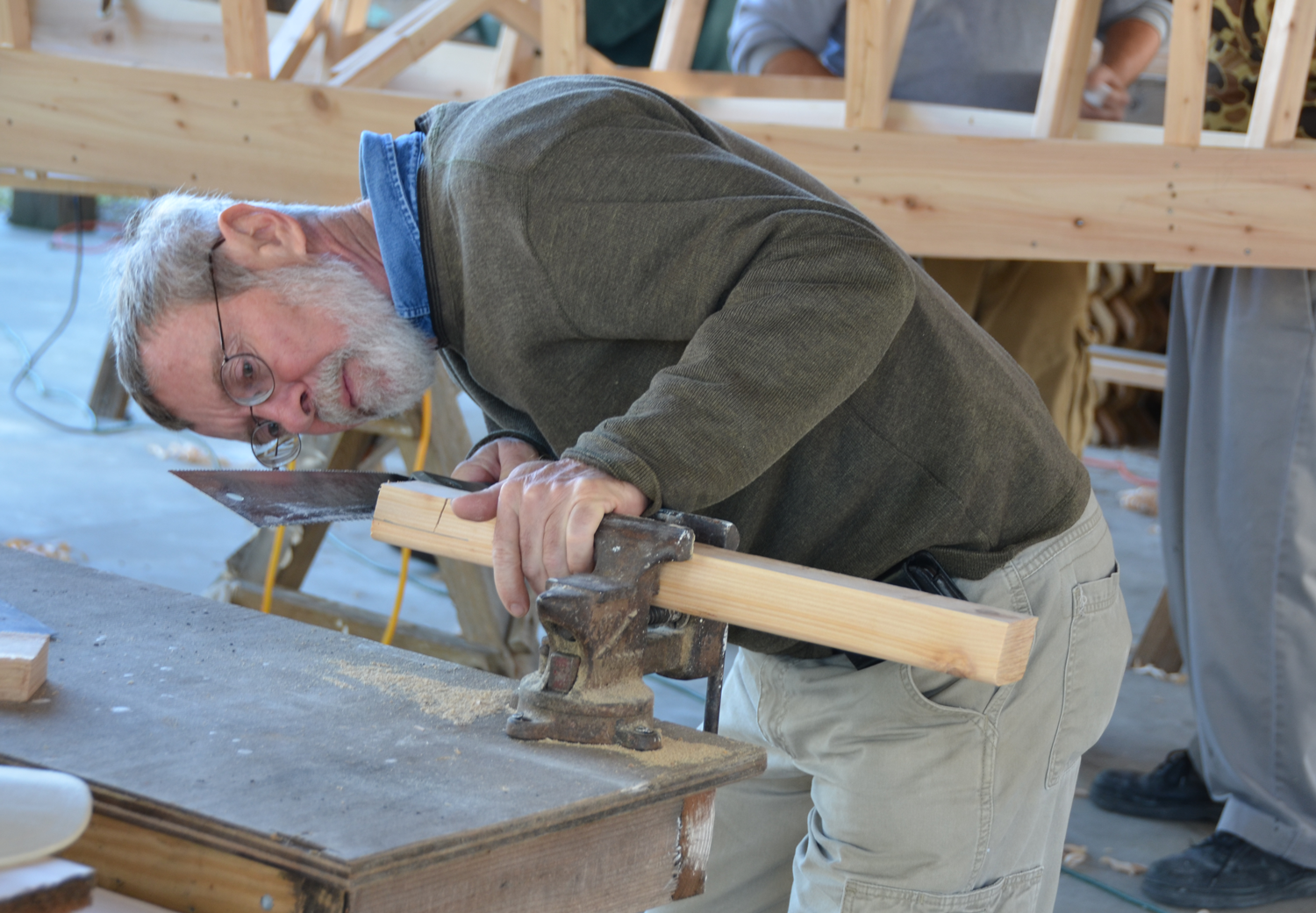
Back home in NC last year, David Burney shapes a critical piece in the ribbing of a traditional wooden boat he’s helping build at the Core Sound Waterfowl Museum and Cultural Center, on Harker’s Island. (photo by Lida Pigott Burney)

No, this is quite something else. For eight years, I have tried to do three jobs: 1) build the NTBG Conservation Department from near oblivion to whatever it is today, largely on grant funding; 2) create a college-accredited Field School program on Kaua`i from scratch; and 3) continue and expand my research program in paleoecology and conservation in the Indo-Pacific region, particularly at Makauwahi Cave on Kaua`i and the Indian Ocean island of Rodrigues (which also has a cave reserve). At my age, that’s just too much – I’m not doing any of it as well as I would like.

Continue reading

Watch for Falling Breadfruit

Out at Makauwahi Cave, we are willing to try almost anything that might teach us something, and that includes growing breadfruit in worn-out clay soil, with strong wind and salt spray, just to see if it can be done.

Breadfruit Illustration

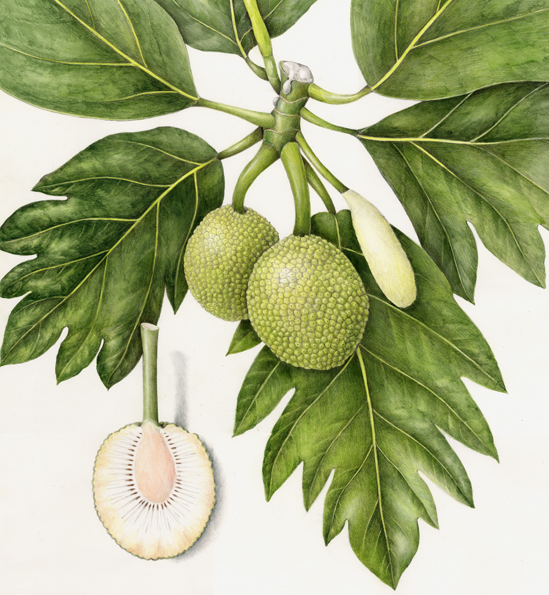
Wendy Hollender produced this beautiful depiction of breadfruit (Artocarpus altilis). If you would like to learn to draw plants on Kauai, go to drawingincolor.com.

That’s what our experiments there are about – finding out what is possible. We’ve learned a few things, because we measure almost everything: young breadfruit need a lot of water, more than twice as much as the native plants we grow down there, or crops like papaya and citrus. Mulch helps, and cardboard makes good mulch, and tortoise dung and the compost tea from it make good fertilizers. It takes only two years to get the first fruits from the Ma`afala variety distributed by NTBG’s Breadfruit Institute, three for traditional Hawaiian varieties.

Continue reading

Tortoise Project Races On

With the slow and steady progress of the tortoises themselves, our project to enlist the help of now eight reptilian volunteers plods on with remarkable results. Our tortoises continue to do major weeding service inside their securely fenced paddocks at Makauwahi Cave Reserve. They have also created quite a buzz throughout the conservation community here in the islands – and well beyond.

Our first major article on the use of tortoises to control invasive weeds in Hawaiian native plant restorations came out last week, in the new, lavishly illustrated flagship journal of the Turtle Conservancy, The Tortoise. HCC 2012

Entitled “Can Unwanted Suburban Tortoises Rescue Native Hawaiian Plants?” the article can be downloaded here along with information on how to obtain the entire beautiful magazine and support the Turtle Conservancy’s many conservation projects worldwide. Continue reading

Weed-Control Paperwork

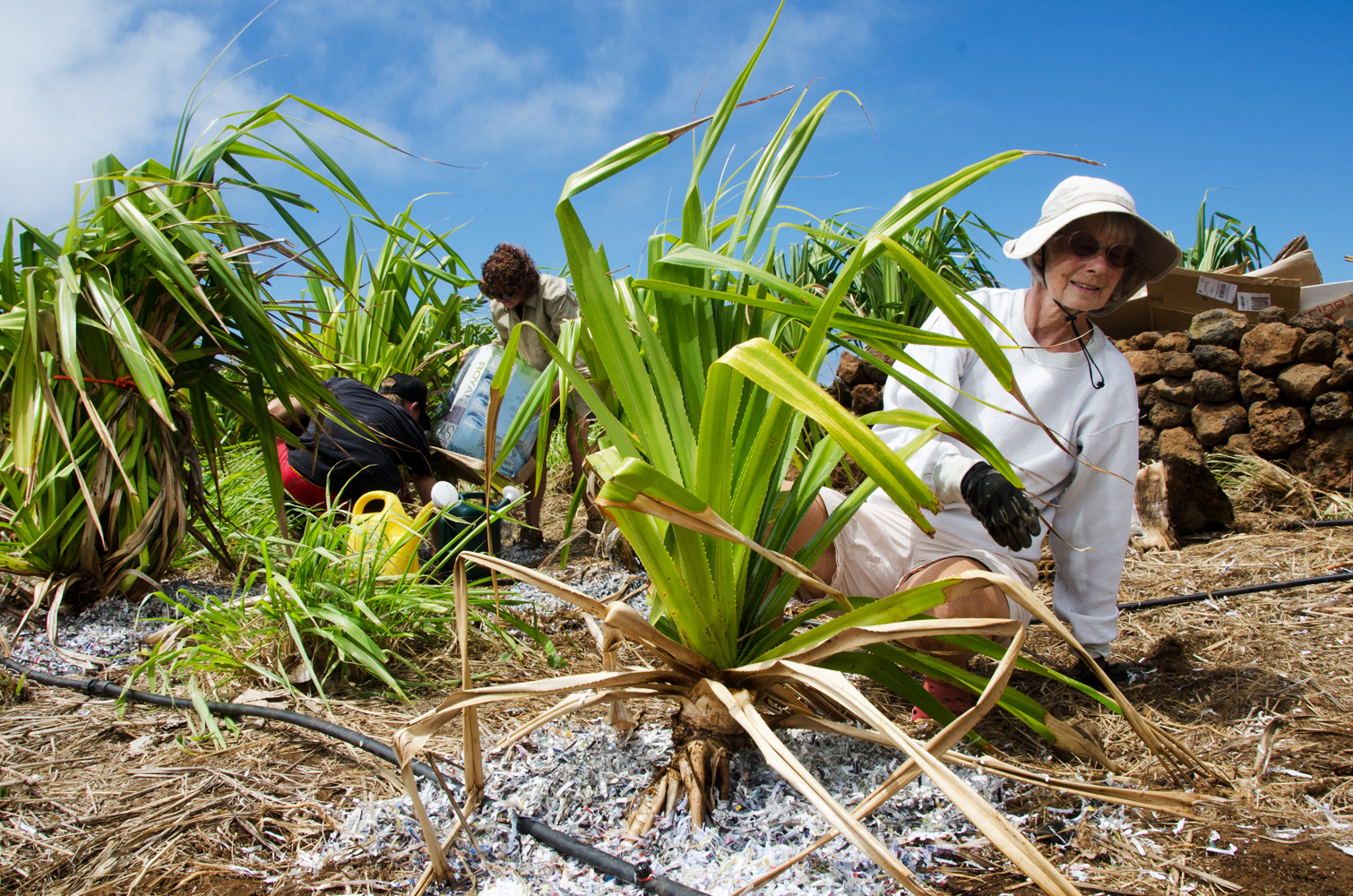
In the native reforestation project at MCR, I have been experimenting with re-purposed materials to control invasive weeds. In between and around the base of 2-yr old hala (Pandanus tectorius) we are using overlapped cardboard along with thick layers of moistened, shredded paper. Minus the shredded paper, this process is also being used around breadfruit (‘ulu) trees (Artocarpus altilis). Both areas require mowing down existing weeds first.

Ace volunteer Billie Dawson puts shredded paper around native hala trees.

Ace volunteer Billie Dawson puts shredded paper around native hala trees.

Continue reading